Water
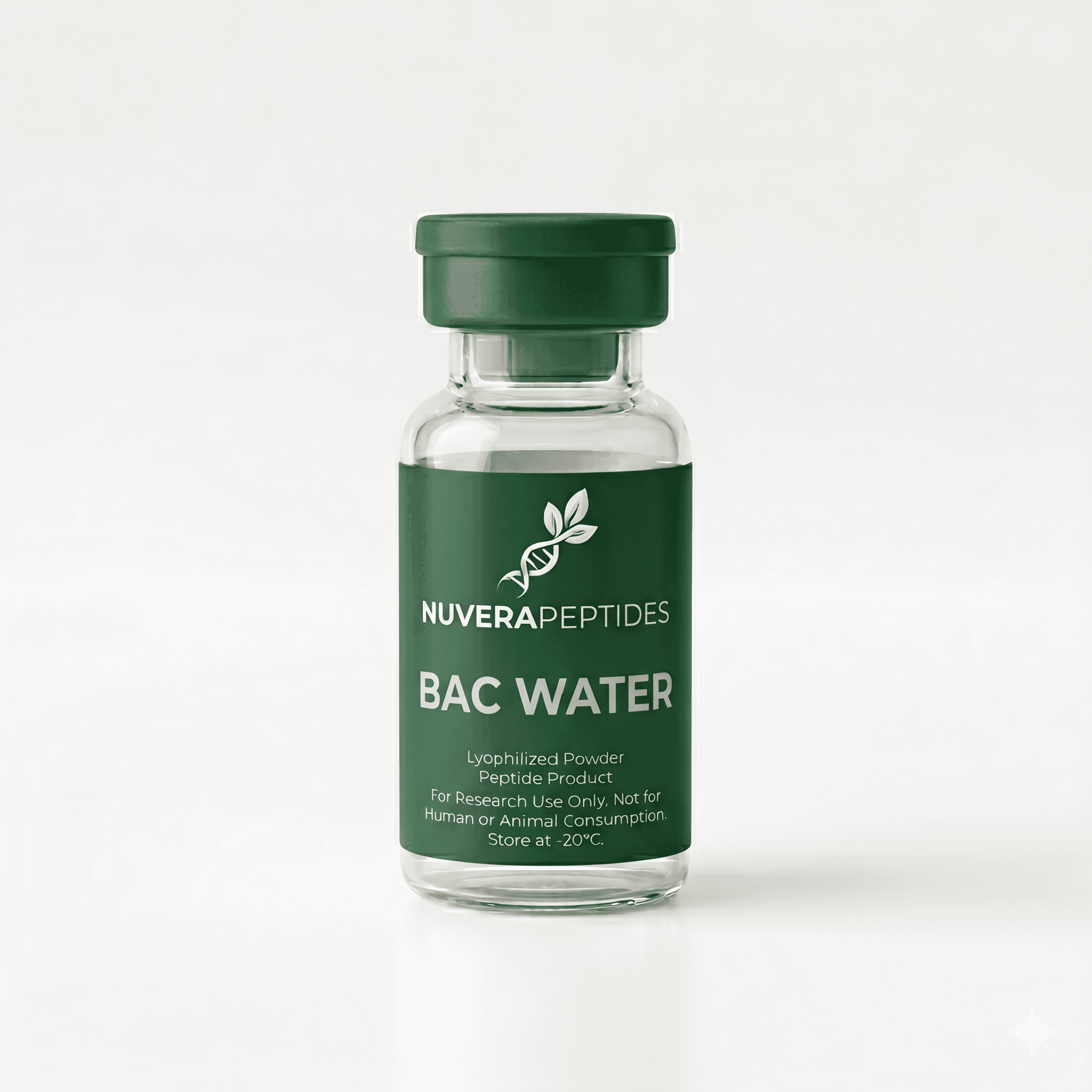
BAC Water
Bacteriostatic water for sterile reconstitution of lyophilized research peptides.
Research Use Only: NuveraPeptides products are intended for laboratory and scientific research purposes only.
Purchase option
Bacteriostatic Water for Injection (BWFI) is sterile water containing 0.9% benzyl alcohol as a preservative, packaged in a multi-dose 30mL vial. The benzyl alcohol inhibits bacterial growth, allowing the vial to be accessed multiple times over a 28-day period without contamination risk. It is the standard diluent for reconstituting lyophilized research peptides. Each vial is USP-grade, pyrogen-tested, and suitable for subcutaneous, intramuscular, or intravenous research applications.
What it does
- 30mL multi-dose vial — 0.9% benzyl alcohol preservative
- USP-grade, sterile, pyrogen-tested
- Suitable for multiple peptide reconstitutions per vial
- Stable for 28 days after first use when refrigerated
- Correct pH and osmolality for peptide stability
How to use
Clean the rubber stopper with an alcohol swab before each use. Insert needle at an angle to prevent coring.
Add desired volume to lyophilized peptide vial using a fresh syringe. Do not inject the BAC water directly onto the peptide powder forcefully.
Store at room temperature or 2–8°C. Discard 28 days after first puncture.
What’s in the box
- 1 lyophilized vial
- Certificate of Analysis
- Desiccant pack
Product FAQ
Bacteriostatic water contains 0.9% benzyl alcohol which prevents bacterial growth across multiple uses. Sterile water for injection is single-use only and becomes contaminated once opened.
Most researchers use 1–2mL per 10mg peptide vial. Using more diluent creates a more dilute solution; using less creates a more concentrated one. Calculate based on your target concentration.
Yes. Bacteriostatic water is compatible with all NuveraPeptides lyophilized products. The exception is IGF-1 LR3, which may benefit from 0.1% acetic acid reconstitution for long-term stability.