Focus
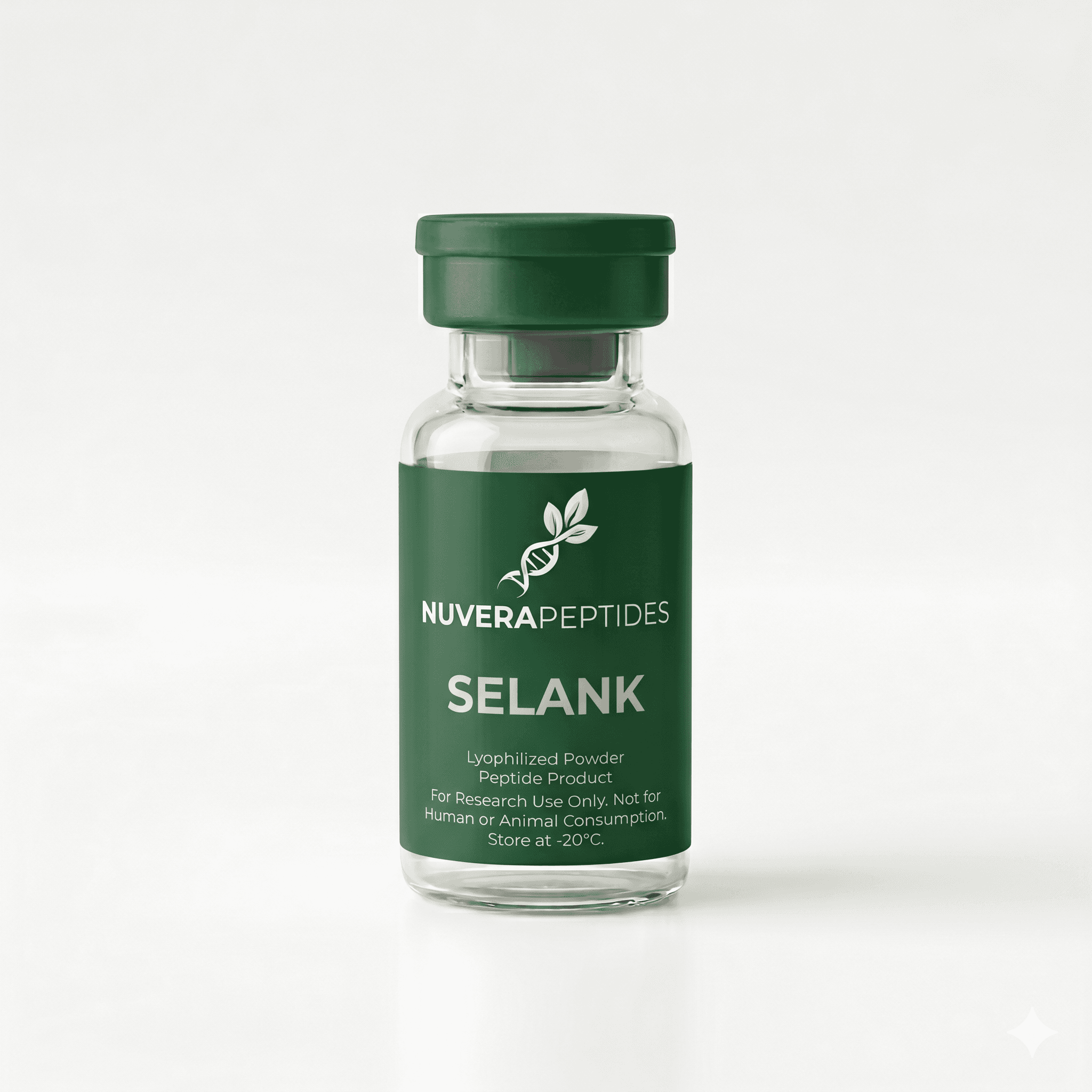
Selank
Anxiolytic heptapeptide analog of tuftsin studied for anxiety reduction, cognitive enhancement, and stress resilience.
Research Use Only: NuveraPeptides products are intended for laboratory and scientific research purposes only.
Purchase option
Selank is a synthetic heptapeptide (Thr-Lys-Pro-Arg-Pro-Gly-Pro) developed by the Institute of Molecular Genetics of the Russian Academy of Sciences as a stable analog of the immunomodulatory tetrapeptide tuftsin. It acts on GABA-A receptors and the serotonin system, producing anxiolytic effects without sedation or dependence in animal models. Selank has also been studied for its ability to upregulate BDNF expression, modulate IL-6 and enkephalin metabolism, and improve cognitive function under stress conditions. Each vial contains 5mg at ≥99% purity.
What it does
- Stable heptapeptide analog of tuftsin
- 5mg lyophilized powder — ≥99% purity verified
- Studied for GABA-A modulation and anxiolytic activity without sedation
- BDNF upregulation and cognitive enhancement research tool
- Third-party tested by ISO-certified laboratory
- Cold-chain shipped with Certificate of Analysis
How to use
Reconstitute with 1–2mL bacteriostatic water. Swirl gently until fully dissolved.
Store lyophilized at 2–8°C. Once reconstituted, refrigerate and use within 30 days.
For research use only.
What’s in the box
- 1 lyophilized vial
- Certificate of Analysis
- Desiccant pack
Product FAQ
Selank modulates GABA-A receptors but lacks the sedative and dependency profile of benzodiazepines in research models. It is studied as a non-sedating anxiolytic with cognitive benefits.
Selank is built on the tuftsin backbone (Thr-Lys-Pro-Arg) with a Pro-Gly-Pro extension that dramatically increases metabolic stability, extending its research utility window compared to tuftsin.
Many researchers pair Selank with DSIP for overlapping anxiety and sleep research. Both target stress-related neuromodulatory pathways via distinct mechanisms.