Focus
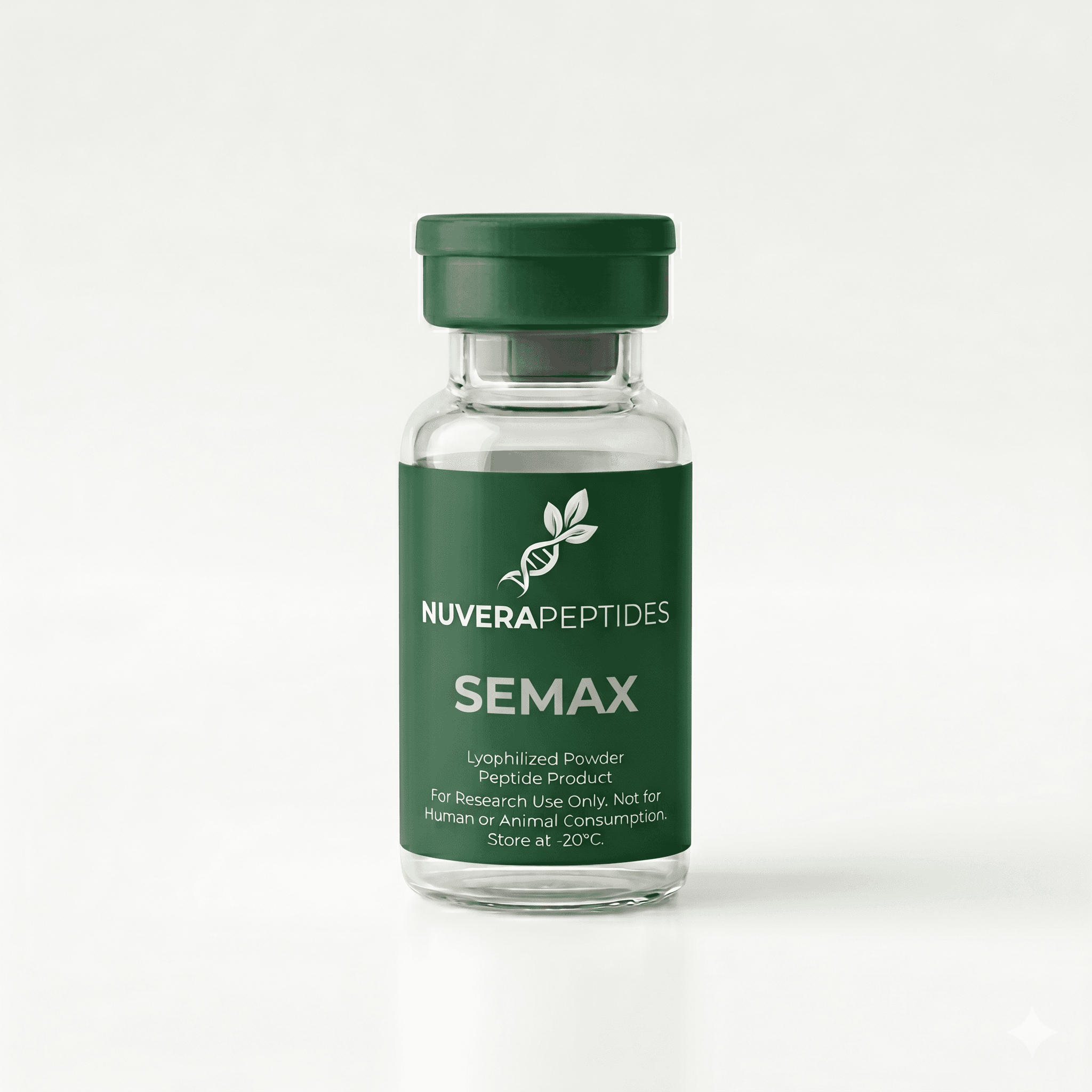
Semax
Neuroprotective ACTH-derived heptapeptide studied for BDNF upregulation, cognitive function, and stroke recovery.
Research Use Only: NuveraPeptides products are intended for laboratory and scientific research purposes only.
Purchase option
Semax is a synthetic heptapeptide (Met-Glu-His-Phe-Pro-Gly-Pro) derived from the ACTH(4-7) sequence, developed at the Institute of Molecular Genetics of the Russian Academy of Sciences. Unlike full ACTH, Semax has no effect on cortisol production and acts primarily through neurotrophin pathways. It has been extensively studied for BDNF (brain-derived neurotrophic factor) and NGF upregulation, neuroprotection following ischemic injury, and enhancement of attention and working memory in animal models. Each vial contains 5mg at ≥99% purity.
What it does
- ACTH(4-7)-derived heptapeptide — no cortisol activity
- 5mg lyophilized powder — ≥99% purity verified
- Studied for BDNF and NGF upregulation in CNS models
- Neuroprotective research in ischemia and cognitive decline
- Third-party tested by ISO-certified laboratory
- Cold-chain shipped with Certificate of Analysis
How to use
Reconstitute with 1–2mL bacteriostatic water. Swirl gently until fully dissolved.
Store lyophilized at 2–8°C. Once reconstituted, refrigerate and use within 30 days.
For research use only.
What’s in the box
- 1 lyophilized vial
- Certificate of Analysis
- Desiccant pack
Product FAQ
No. Semax is derived from ACTH(4-7), the fragment responsible for cognitive and neurotrophin effects. It does not bind adrenal receptors or stimulate cortisol production in research models.
BDNF is the primary neurotrophin supporting neuron survival, synaptic plasticity, and long-term potentiation. Its upregulation is a key mechanistic target in neuroprotection, depression, and cognitive enhancement research.
Selank primarily targets anxiolytic and stress-resilience pathways; Semax targets neurotrophin production and cognitive function. Researchers often pair them for a more comprehensive cognitive neuroscience protocol.